
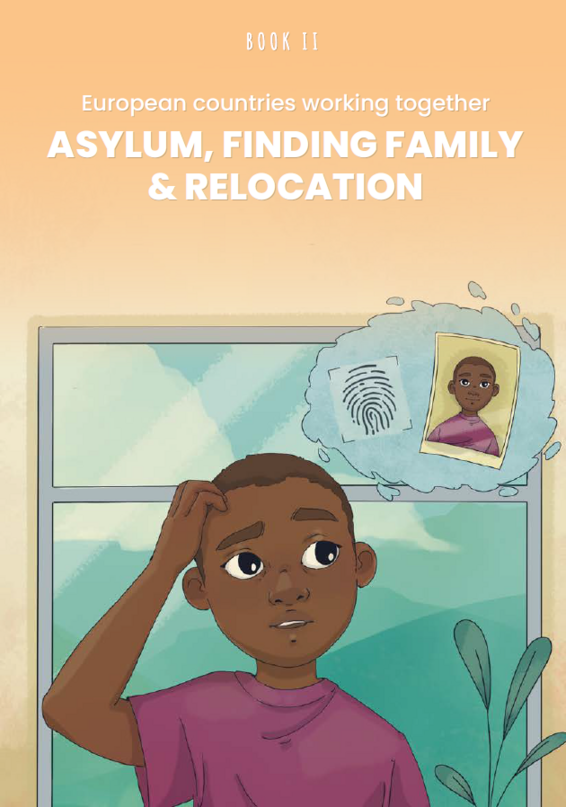
Part 2 of a series of four picture stories. This story covers the rights, obligations and main consequences of non-compliance in a simplified manner as it relates to the AMMR and Eurodac. The story also touches upon family tracing and reunification. While the content is particularly tailored to unaccompanied children, the story can also be relevant to accompanied asylum-seeking children.
This section contains information materials developed by the EUAA. There are two types of materials available.
Pact related information materials. The Pact on Migration and Asylum strengthens the right to information and the way in which information is to be provided, with an increased focus on applicants with special needs. The Pact also strengthens the harmonised provision of information, including by Member States providing information using materials drawn up by the EUAA. The EUAA was directly tasked to develop ‘common information material’ (Article 19 AMMR), ‘common leaflets’ (Article 42(3) Eurodac III Regulation and Article 20(2) AMMR), ‘leaflets’ (Article 8 APR) and ‘templates’ (Article 5 RCD (2024)). They were developed in such a way as to allow Member States to add country-specific information and are generically called 'brochures'. Member States must customise the brochures before use. A complementary package of pictures stories, posters, animation and flashcards was developed to provide information to applicants with special needs. Thirty-two different products were developed in total.
Information materials related to previous CEAS and published in 2023. These can be used by national authorities and other entities responsible for the provision of information on the asylum procedure and reception. These include animations, posters, brochures, leaflets and slide presentations. Some information materials are generic, with general and standard information applicable in all Member States. Other materials have been developed in a way that national authorities and other responsible entities are expected to complete them with national and/or local or specific information before using them. The materials come with ‘how to use’ manuals explaining when to distribute it, how and to whom. Some manuals also include a ‘script’ to support facilitators in carrying out information sessions using the material. The label 'Pact-compliant' indicates which materials published in 2023 can be used in the context of the new legal framework.
Methodology. All the information provision materials were developed according to the communication methodology of the EUAA Let’s Speak Asylum project. They were tested with applicants from various profiles and target groups. The materials are complementary to the other sections of the portal. These should be used in a mix of communication channels and complemented with the provision of specific information tailored to the individual needs of the applicant, in line with the methodology and the relevant applicable provisions.
© European Union Agency for Asylum, 2026.
Reproduction is authorised, provided the source is acknowledged.
Neither the European Union Agency for Asylum (EUAA) nor any person acting on behalf of the EUAA is responsible for the use that might be made of the information provision materials of this library nor are they be liable for any consequence stemming from their reuse.
The EUAA does not accept any responsibility or liability for the accuracy, content, completeness, legality, or reliability of the information added by third parties to the customisable parts of the information materials.
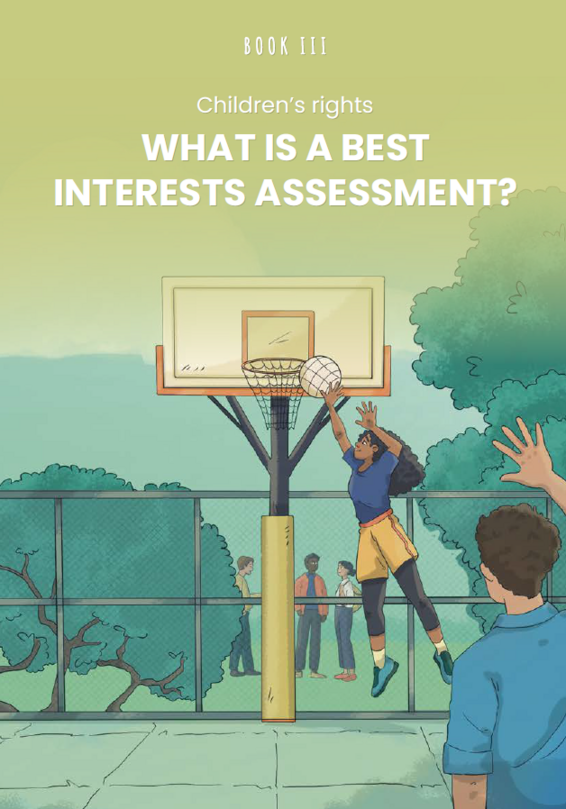
Part 3 of a series of four picture stories. This story refers to the RCD and explains the purpose and process of a best interests assessment which is to be conducted within a month of registering an application for international protection. While the content is particularly tailored to unaccompanied children, the story can also be relevant to accompanied asylum-seeking children.
Part 4 of a series of four picture stories. This story covers key rights and obligations during the making/registering of an application for international protection, in line with the APR. While the content is particularly tailored to unaccompanied children, the story can also be relevant to accompanied asylum-seeking children. Country-specific information may be inserted directly into the editable fields in a section called 'Important' online and to be found towards the end of the picture story or after downloading the story together with the applicant manually.
Poster 1 can be used as early as upon arrival and/or when a person communicates their wish to seek asylum. It conveys the key messages from the picture story with the same title. The poster is particularly useful in situations where people need to receive basic information about their rights and obligations but may not yet be in a physical or mental state to process a lot of information. The poster can be used with adult and child applicants.
Poster 2 captures key rights and obligations linked to the AMMR. It conveys the key messages from the picture story with the same title. The poster is particularly useful in situations where people need to receive basic information about their rights and obligations but may not yet be in a physical or mental state to process a lot of information. The poster can be used with adult and child applicants. Countries who have opted out on certain provisions might need to adjust certain contents (relocation).
Poster 3 refers to the RCD and states that a best interests assessment is to be conducted with children within a month of registering their application for international protection. It conveys the key messages from the picture story with the same title. The poster is particularly useful in situations where children and care givers need to receive basic information about the process, purpose, right and obligations but may not yet be in a physical or mental state to process a lot of information. The poster can be used with adult and child applicants.
Poster 4 covers key rights and obligations during the making/registering of an application for international protection, in line with the APR. It conveys the key messages from the picture story with the same title. The poster is particularly useful in situations where people need to receive basic information about their rights and obligations but may not yet be in a physical or mental state to process large amounts of information. The poster can be used with adult and child applicants.
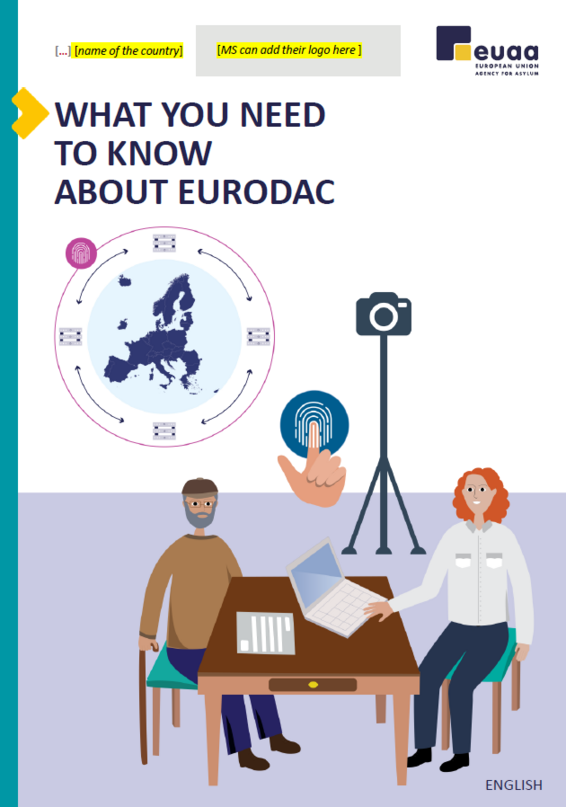
The brochure supports EU+ countries meet their obligations and provide information to third-country nationals and stateless persons whose personal data is transmitted to the Eurodac database. It corresponds to the EUAA ‘common information material’ (Article 20(2) AMMR) regarding the application of Eurodac III Regulation and the ‘common leaflet’ referred to in Article 42(3) of the Eurodac III Regulation. The text of the brochure is set out in Annex XI of the Commission Implementing Regulation 2025/2055.
The info note complements the brochure titled ‘What you need to know about Eurodac’ and informs beneficiaries of temporary protection about the specific individual categories of information collected and stored in their case. The text of the info note is set out in Annex XI of the Commission Implementing Regulation 2025/2055. The info note must be customised by national authorities with country-specific information before use.
The info note complements the brochure titled ‘What you need to know about Eurodac’ and informs persons resettled under a national resettlement or humanitarian admission program about the specific individual categories of information collected and stored in their case. The text of the info note is set out in Annex XI of the Commission Implementing Regulation 2025/2055. The info note must be customised by national authorities with country-specific information before use.
The info note complements the brochure titled ‘What you need to know about Eurodac’ and informs persons registered for the purpose of conducting an admission procedure under the union resettlement and humanitarian admission framework about the specific individual categories of information collected and stored in their case. The text of the info note is set out in Annex XI of the Commission Implementing Regulation 2025/2055. The info note must be customised by national authorities with country-specific information before use.
The info note complements the brochure titled ‘What you need to know about Eurodac’ and informs third-country nationals illegally staying in a Member State about the specific individual categories of information collected and stored in their case as well as the possibility for a security flag to be added to their dataset where it is considered that the person could pose a threat to internal security. The text of the info note is set out in Annex XI of the Commission Implementing Regulation 2025/2055.
The info note complements the brochure titled ‘What you need to know about Eurodac’ and informs third-country nationals disembarked following a search and rescue operation about the specific individual categories of information collected and stored in their case as well as the possibility for a security flag to be added to their dataset where it is considered that the person could pose a threat to internal security. The text of the info note is set out in Annex XI of the Commission Implementing Regulation 2025/2055.
The info note complements the brochure titled ‘What you need to know about Eurodac’ and informs third-country nationals with an irregular crossing of an external border about the specific individual categories of information collected and stored in their case as well as the possibility for a security flag to be added to their dataset where it is considered that the person could pose a threat to internal security. The text of the info note is set out in Annex XI of the Commission Implementing Regulation 2025/2055.
The info note complements the brochure titled ‘What you need to know about Eurodac’ and informs applicants for international protection about the specific individual categories of information collected and stored in their case as well as the possibility for a security flag to be added to their dataset where it is considered that the person could pose a threat to internal security. The text of the info note is set out in Annex XI of the Commission Implementing Regulation 2025/2055. The info note must be customised by national authorities with country-specific information before use.